Yes, squirrels will eat birds, but the full answer is more nuanced than a simple yes or no. Most of the time, a squirrel at your feeder is after seeds, not songbirds. But squirrels, especially fox squirrels and red squirrels, are documented egg and nestling predators, and under the right conditions they will kill and eat small birds. If you found a dead bird, a raided nest, or you're watching a squirrel harass birds at your feeder, here's exactly what you need to know and what to do about it today.
Will a Squirrel Eat or Kill a Bird? What to Do
Maya Bennett
22 Mar 2026
Will Squirrels Eat Birds or Kill Them? The Direct Answer
Squirrels are primarily herbivores. Seeds, nuts, acorns, fungi, berries, and buds make up the vast majority of their diet. But they are opportunistic omnivores, and multiple government wildlife agencies, including the US Forest Service, the National Park Service, and the Florida Fish and Wildlife Conservation Commission, confirm that squirrels eat bird eggs and occasionally small vertebrates. The US Forest Service's species review for the eastern fox squirrel lists bird eggs explicitly as a food source. Purdue Extension notes that fox squirrels will eat insects and birds in suburban settings.
There's also documented evidence of squirrels preying on nestlings. USFS research specifically records avian nestling predation by the Mount Graham red squirrel. So yes, a squirrel can and sometimes does kill small birds, particularly hatchlings and fledglings in exposed nests. Adult, healthy birds are rarely killed by squirrels because squirrels aren't fast enough to catch them. The real risk is to eggs, nestlings, and young birds that can't yet fly.
It's also worth noting that chipmunks, which are closely related small rodents, are documented common predators of songbird nests, eating eggs and nestlings, and even fledgling young. A Nature study found that ground-nesting birds actively avoid territories of egg-eating eastern chipmunks. So if you're seeing small rodent activity near a nest, the threat is real, not just theoretical.
The short version: squirrels chasing birds at a feeder is mostly a competition-for-food behavior. But a squirrel near an active nest is a genuine predation risk to eggs and young birds.
When Squirrels Actually Target Birds
Squirrels don't go looking for birds the way a hawk or a cat does. Predation on eggs and nestlings tends to happen when a squirrel encounters a nest while foraging and seizes an easy opportunity. A few situations dramatically increase the risk.
- Nest boxes and birdhouses with enlarged entry holes: The USFWS notes that if a birdhouse entry hole is gnawed or enlarged, a red squirrel is a likely culprit, and nest contents are at risk.
- Low or exposed nests: Ground nests and nests in low shrubs are far more accessible to squirrels than high, cavity nests.
- Hunger or food scarcity: Research published in The Auk found that predator hunger influences attack propensity on eggs. A squirrel that can't find enough seeds is more likely to go for eggs.
- Late winter and early spring: Natural food stores run low, and early-nesting birds like robins are actively nesting, making this a higher-risk window.
- Feeders that also attract squirrels near nesting areas: When squirrels are already regularly present in a yard, the chance of a nest encounter goes up significantly.
At a feeder, the behavior you're most likely seeing is competition and resource guarding, not predation. Squirrels chase birds away because they want the seed, not the bird. That said, a squirrel that has figured out a feeder is also a squirrel that's spending a lot of time in your yard, which increases the odds of a nest encounter. The two problems are connected.
How to Tell if a Squirrel Did It (vs. a Cat, Hawk, or Raccoon)
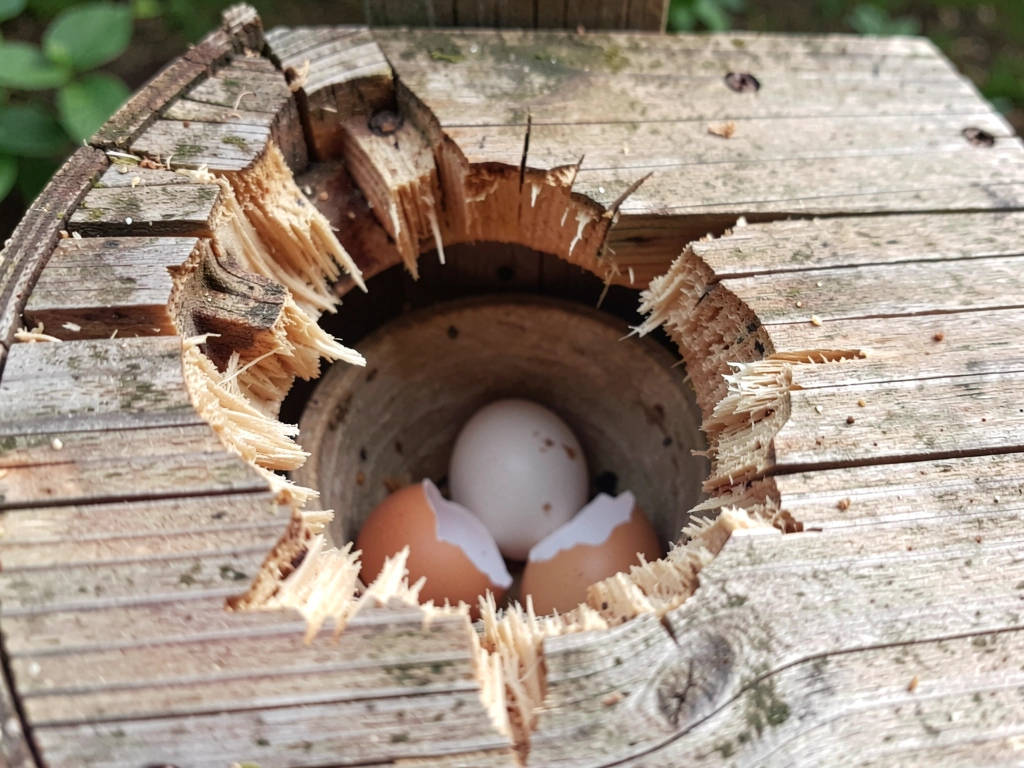
If you found a dead bird, a ransacked nest, or missing eggs, the evidence can help you identify what happened. Different predators leave very different signs. This matters because your protective response should match the actual threat.
| Predator | Typical Signs Left Behind | Nest/Egg Damage Pattern |
|---|---|---|
| Squirrel | Gnaw marks on nest box wood or eggs, scattered shell fragments near nest, partially eaten eggs or nestlings | Eggs cracked or gnawed open; gnaw marks visible on eggshell edges or nest box entry hole |
| Cat | Bite/puncture marks concentrated on head/neck area, feathers scattered, carcass may be mostly intact or partially consumed | Often takes whole bird; feather piles with no carcass are common |
| Hawk | Clean plucking of feathers in a pile, feathers pulled not bitten, sternum often exposed and eaten, no scattered bones | Prey consumed at or near a plucking post; wing feathers left in a fan pattern |
| Raccoon | Nest contents removed or scattered, nest structure damaged or pulled apart, eggshell fragments spread widely | Nest torn open from above; larger damage radius than a squirrel |
| Snake | Eggs or nestlings gone with no shell fragments or feathers, nest otherwise undisturbed | Clean disappearance; no mechanical damage to nest or box |
Boston University researchers who study squirrel gnawing marks on bone note that squirrels leave distinctive striated gnaw marks, which differ clearly from the puncture or shear marks left by carnivore teeth. If a nest box entry hole has been chewed and enlarged, that is a reliable signature of squirrel involvement. If feathers are cleanly plucked and arranged, that points to a raptor. If the carcass has puncture wounds on the skull and neck, a cat is the most likely culprit. The real question is: what bird eats snakes, but first, make sure you identify which animals target small birds in general, and the topic of what eats a small bird covers a broader range of common backyard predators.
What to Do Right Now if You Found a Dead Bird
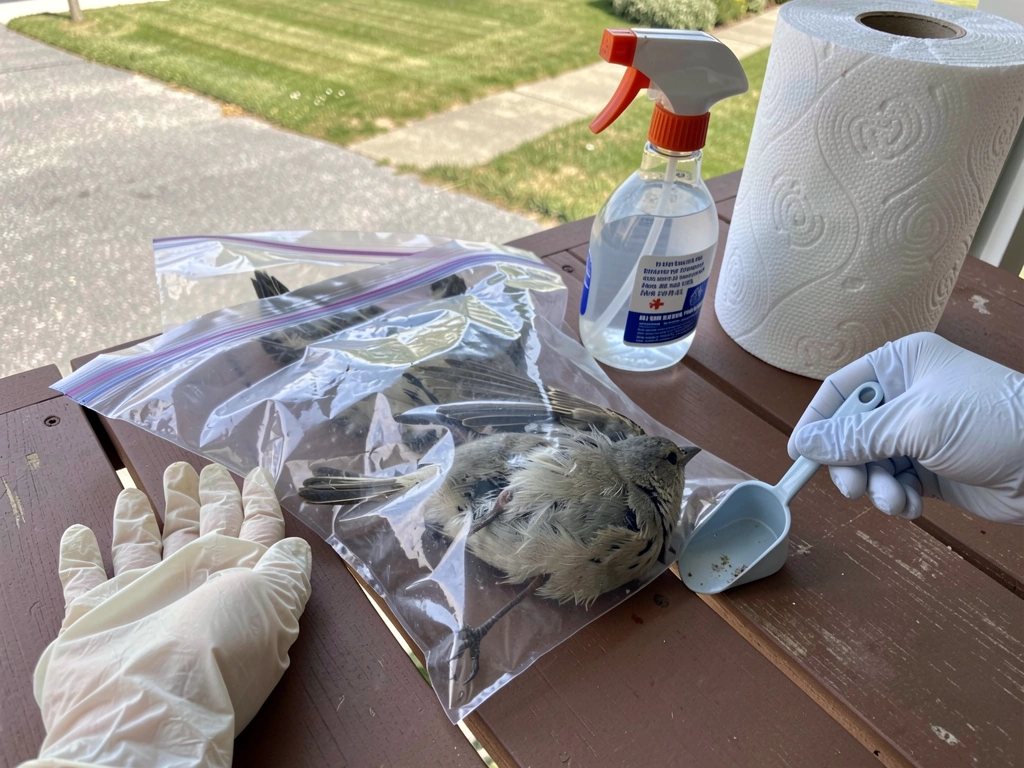
Before doing anything else, don't handle the bird with bare hands. Avian influenza is an active concern. The USFWS, Indiana DNR, and OSHA all recommend wearing gloves when handling any dead bird, avoiding touching your face, and washing your hands thoroughly after. If the bird looks sick rather than predated (no obvious wound or gnaw marks, found alone), bag it in two sealed plastic bags and contact your state wildlife agency before disposing of it.
- Put on disposable gloves before touching the bird or nest material.
- Examine the carcass and area quickly for the signs described above (gnaw marks, feather patterns, wound locations).
- Double-bag the remains in sealed plastic bags for disposal if there's no suspicion of disease.
- If the bird appears diseased rather than predated, contact your state wildlife agency or veterinarian before disposal.
- Disinfect the area where you found the bird and wash your hands with soap and water immediately after.
Protecting Birds at Feeders and Birdhouses
This is where you can make the biggest immediate difference. Squirrels are persistent and athletic, but smart placement and physical barriers stop them reliably. Here's what the research and wildlife agency guidance actually recommends, not just generic advice.
Feeder Placement Rules That Actually Work
The Washington Department of Fish and Wildlife recommends placing feeders at least 5 feet off the ground and at least 10 feet from the nearest large shrub, tree limb, deck, or fence. The University of Nebraska-Lincoln guidance goes slightly further and suggests 8 feet of horizontal clearance from any launching point. Squirrels can jump about 5 feet vertically and up to 10 feet horizontally from a standing start, so these distances aren't arbitrary. If your feeder is within jump range of anything climbable, you're going to have squirrels on it.
Baffles: The Single Most Effective Tool
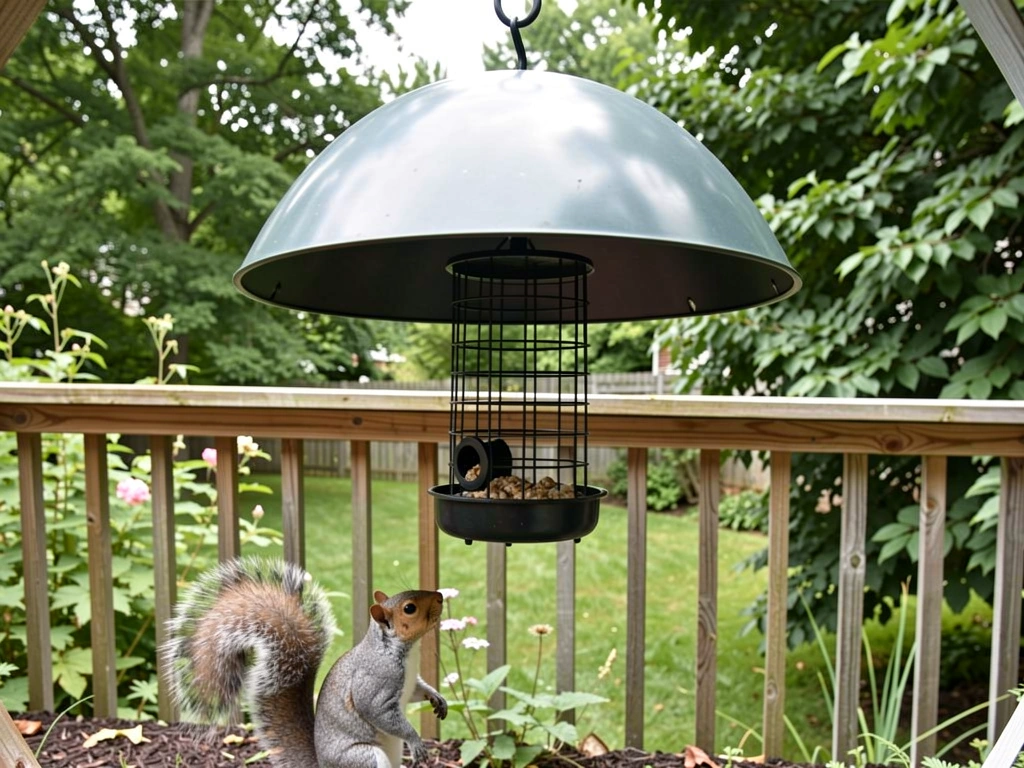
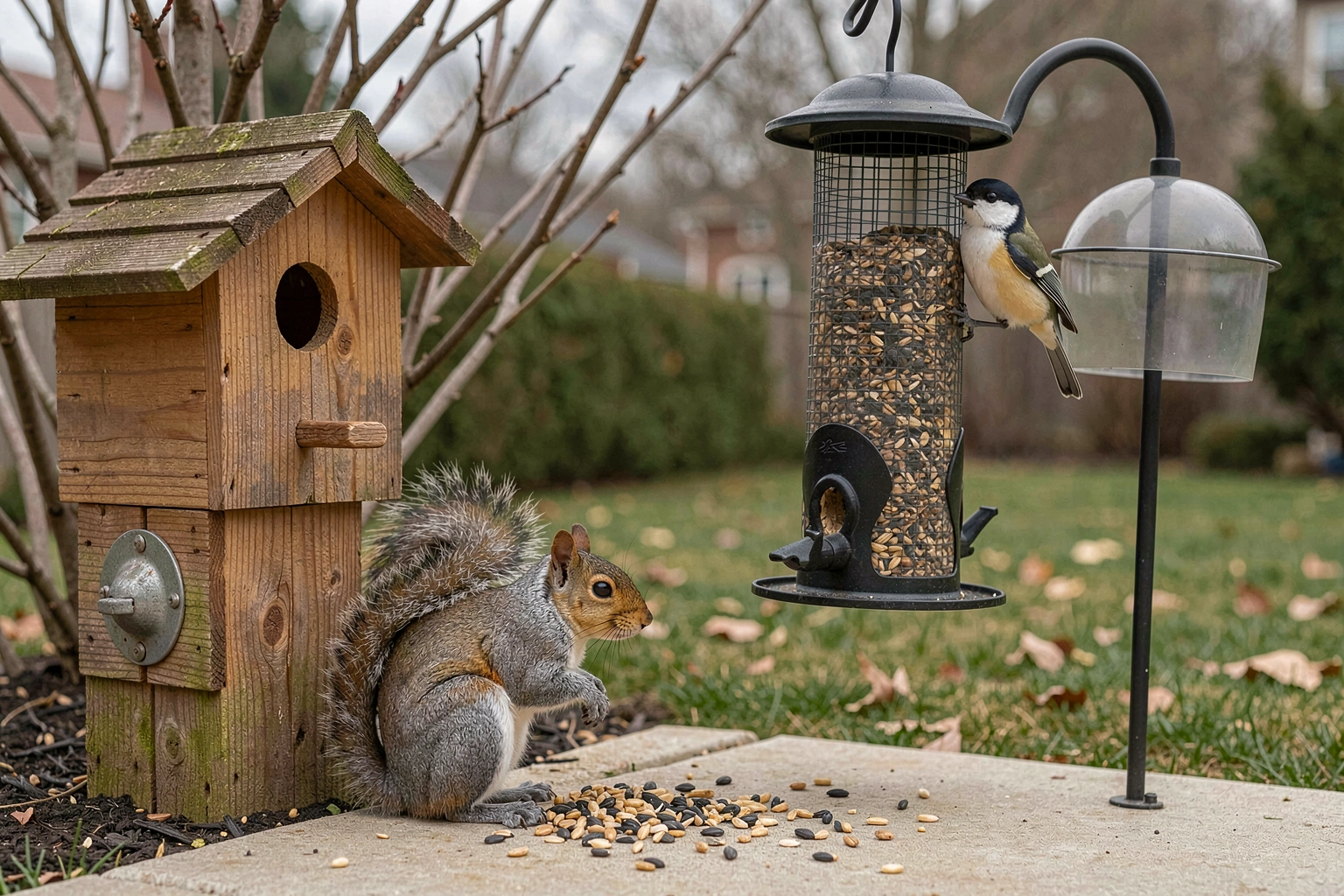
A dome-shaped squirrel baffle, mounted above a hanging feeder or below a pole-mounted feeder, is the most effective single barrier you can install. The WDFW explicitly recommends commercially available dome baffles for both hanging and pole-mounted feeders. The baffle needs to be at least 15 to 18 inches wide to prevent a squirrel from reaching around it, and it must be positioned so the squirrel can't simply jump past it from above.
The WDFW also describes a wire-suspension trick: hang the feeder from a horizontal wire strung between two points, then thread a length of 1-inch PVC pipe over the wire on each side of the feeder. When a squirrel tries to walk the wire, the pipe spins and dumps it off. It sounds simple because it is, and it works.
Caged and Guarded Feeders
Caged feeders, which are standard tube feeders surrounded by a wide-mesh wire cage, physically prevent squirrels from reaching the ports while allowing smaller songbirds to pass through easily. These are especially useful if you can't achieve the ideal placement distances due to yard layout. They also have the bonus of excluding larger bully birds like starlings.
Birdhouse Protections
For birdhouses and nest boxes, the entry hole size matters a lot. A hole sized correctly for the intended species (1.5 inches for bluebirds, 1.125 inches for chickadees) is already too small for most squirrels, but a red squirrel can gnaw it larger. A metal hole guard or metal predator plate around the entry hole prevents gnawing and is one of the best upgrades you can make to any nest box. Mount the box on a smooth metal pole with a cone baffle below it, keeping it away from fences and overhanging branches.
Yard-Proofing and Reducing Squirrel Attractants
Barriers at feeders and nest boxes help a lot, but reducing the reasons squirrels want to be in your yard in the first place is just as important. The University of Wisconsin extension notes that removing bird feeders entirely eliminates one major squirrel food source, though obviously that's not what most backyard birders want to hear. A more practical approach is to manage what you can.
- Switch to squirrel-resistant seed: Hot pepper-treated seed or straight safflower seed are far less attractive to squirrels than sunflower or mixed seed. Birds don't detect capsaicin the way mammals do.
- Use a tray catcher under feeders: Spilled seed on the ground is a major attractant for both squirrels and other wildlife like raccoons. A tray below the feeder reduces ground spillage.
- Trim limb access routes: The University of Wisconsin recommends trimming branches that give squirrels a jumping or running route to feeders, nest boxes, or structures. Keep branches at least 10 feet away from any feeder.
- Remove other food sources: Fallen fruit, exposed compost, and unsecured garbage all attract squirrels and increase their presence in your yard.
- Don't feed squirrels directly: Intentional squirrel feeding nearby, even in a separate location, habituates them to your yard and increases overall activity near nests and feeders.
If squirrels are getting into your garden and targeting low shrub nests, temporary wire mesh fencing around nest-bearing shrubs during the nesting season (roughly March through July in most of North America) can provide a physical barrier. It doesn't have to be permanent or pretty, just effective for the 2 to 3 weeks the eggs and nestlings are most vulnerable.
Legal Considerations and When to Call Wildlife Control
Before you reach for a trap or consider any lethal control, there are a few things you need to know about the legal landscape. Most native birds, including their nests and eggs, are protected under the Migratory Bird Treaty Act. The USFWS is clear that disturbing or destroying protected nests requires permits in most situations. Squirrels themselves are regulated as game or nongame animals depending on your state, so your legal options for trapping or removing them vary significantly by location.
In the US, trapping and relocating squirrels is regulated at the state level. The Oregon Department of Fish and Wildlife, Michigan DNR, and other state agencies each have their own rules about what methods are allowed, whether permits are required, and whether relocation is even legal in your state. In some states, trapping a squirrel and releasing it elsewhere requires a permit; in others, it's outright prohibited because it spreads diseases like mange or, in some regions, squirrel pox. Check with your state wildlife agency before setting any trap.
Lethal control is an option in most US states for squirrels causing documented damage, but it must follow state regulations. Michigan, for example, has specific approvals and conditions attached to lethal trapping methods for gray and fox squirrels. If you're unsure what's allowed in your area, calling your state wildlife agency or a licensed wildlife control operator is the right move. Wildlife control professionals are licensed to handle trapping, relocation, and legal removal in ways that backyard residents typically aren't.
When DIY Isn't Enough: Call a Professional
Call a licensed wildlife control operator or your state wildlife agency if you're dealing with any of these situations:
- Repeated or escalating nest predation despite physical barriers already in place
- A squirrel that is sick, injured, or behaving abnormally (potential disease risk)
- Squirrels that have entered a structure (attic, walls, shed) and may be nesting inside
- Any situation where you're uncertain about local trapping or removal laws
- Multiple dead birds over a short period, especially if squirrel involvement isn't confirmed (other predators or disease may be involved)
Your Action Checklist for Today
- Check your feeder placement: is it at least 5 to 10 feet horizontally from any jump point and at least 5 feet off the ground? Adjust if not.
- Install a dome baffle above hanging feeders or below pole-mounted feeders if you don't already have one.
- Check nest boxes for gnawed entry holes and add a metal hole guard if needed.
- Switch to safflower or hot pepper-treated seed to reduce squirrel interest.
- Trim any branches within 10 feet of feeders or nest boxes.
- Add a tray catcher under feeders to eliminate ground spillage.
- If you found a dead bird: wear gloves, examine for evidence, double-bag for disposal, and wash your hands thoroughly.
- If you suspect a diseased bird rather than predation: contact your state wildlife agency before disposal.
- Look up your state's squirrel trapping laws before attempting any removal.
- Call a licensed wildlife control operator if physical barriers haven't solved the problem or if the situation involves sick wildlife or structural entry.
FAQ
If I see a squirrel chasing birds at my feeder, does that mean it will kill the birds?
Not necessarily. Chasing at feeders is usually a food-competition or guarding behavior, especially if the birds are adults. The higher-risk sign is what happens near nests (eggs missing, a nestling remains, or a nest box entry hole enlarged). If you only see harassment at the feeder without nest damage, focus on barrier placement and feeder management first.
How can I tell whether a nest was raided by a squirrel versus a chipmunk or a bird of prey?
Look closely at entry and removal patterns. Squirrels often chew and enlarge holes (distinct gnawing marks) and may leave wood shavings around a nest box opening. Birds of prey more often leave feathers in a noticeable pattern, with visible tearing rather than gnawing. Chipmunks may show more frequent small-scale digging or egg taking on the ground, and they tend to target ground-nesting sites more often than squirrels do.
Will squirrels eat already-dead birds, or do they only kill live birds?
They can do both, but the key difference is condition on discovery. If you find a carcass without clear gnawing, punctures, or nest-related evidence, it may have died from other causes. If a squirrel is involved, you are more likely to see feeder or nest box activity, tooth marks, disturbed nesting material, or a nest that was accessed and then disturbed.
What should I do if I find a dead bird that might be from a disease outbreak?
Treat it as potentially infectious. Use gloves, avoid touching your face, and wash hands thoroughly afterward. Seal the bird in two separate bags before disposal, and contact your state wildlife agency for guidance if the bird appears sick or intact rather than clearly predated. Do not compost or leave it where pets can access it.
Are there specific feeder types that squirrels prefer, and can that change the risk?
Yes. Squirrels tend to exploit easy-feeding designs, like open platforms and hanging setups without strong baffles. Caged tube feeders usually reduce squirrel access to ports while still letting small songbirds feed, which lowers both direct raiding and the time squirrels spend near nests.
How do I choose the right squirrel baffle size and placement for my feeder?
Use the baffle width guidance and make sure there is no “launch path” over or beside it. A baffle that is too narrow can be reached around, and a feeder placed within a squirrel’s jump reach from a nearby tree limb, fence, or roof edge makes the baffle less effective. If you have limited yard space, switch to a caged feeder or a wire-suspension method instead of relying on a partially compliant setup.
Do squirrels pose more risk to ground nesters than to birds using nest boxes?
Often yes, but it depends on local behavior and your yard layout. Ground nesters face chipmunks and other small predators more frequently, but squirrels can still raid nests when they encounter them during foraging. If you have low shrub or ground nesting sites, temporary mesh fencing during the most vulnerable weeks can be more practical than feeder-only fixes.
If the nest box hole size is correct, can squirrels still get in?
It is less likely, but it is not foolproof. Some red squirrels can gnaw entry holes larger over time, even when the opening started at the correct dimension for the target species. A metal hole guard or predator plate is the most reliable upgrade, and you should also mount boxes on smooth poles with cone baffles to reduce climbing access.
Should I trap or relocate squirrels if they keep raiding nests?
Usually it’s best to escalate only after you’ve confirmed the problem with evidence and tried exclusion first (baffles, caged feeders, nest box guards, and placement). Trapping and relocation are regulated at the state level and may require permits, especially if relocation is even allowed. Diseases can also be a concern with relocation, so contact your state wildlife agency before trapping.
When does it make sense to call a wildlife control professional?
Call if you have repeated documented nest predation, persistent feeder raiding even after installing barriers, or uncertainty about legality and safe removal methods. Professionals are also helpful when damage involves multiple structures (feeders, decks, and trees) or when you need an approach that complies with local wildlife rules.
Next Article
What Bird Eats Snakes? Top Species and How to Spot Them
Find the main snake-eating birds by region and spotting signs, plus safe steps to confirm predation near you.