Yes, squirrels eat bird eggs. This is not a rare or accidental behavior. It happens regularly across the USA, it involves multiple squirrel species, and it can seriously impact ground-nesting and cavity-nesting birds in your yard or nearby woods. If you are watching eggs disappear from a nest and squirrels are around, they are a very real suspect.
Do Squirrels Eat Bird Eggs? USA Guide and Prevention

Maya Bennett
22 Mar 2026
The quick answer: do squirrels eat bird eggs?
Squirrels are omnivores. Most people picture them eating nuts and seeds, but when protein is available and easy to reach, they will take it. Bird eggs are exactly that: a concentrated, easy-calorie protein source sitting in a predictable location. Research monitoring ovenbird nests in northern hardwood forests specifically identifies the eastern gray squirrel and the red squirrel as documented nest predators alongside other mammal species. So the short answer is yes, a squirrel will eat bird eggs, does eat bird eggs, and will steal them directly from the nest. The grammar variants you have seen ("does squirrels eat," "do a squirrel eat") all point to the same behavior, and the answer to all of them is the same: yes.
One thing worth clarifying upfront: squirrels eating eggs is more common than squirrels eating adult birds. An adult bird can fly away. An egg cannot. So when people ask whether squirrels eat "birds or bird eggs," the honest answer is that eggs are the much more frequent target. A squirrel will occasionally take a nestling, but a fully grown bird is rarely on the menu.
Which squirrel types are most likely to raid nests?
Not every squirrel species is equally bold about going after eggs. Here is how the three main groups break down in the USA.
Red squirrels (Tamiasciurus hudsonicus)
Red squirrels are small, fast, and notably aggressive for their size. They are active predators of nest contents and are explicitly named in nest predation studies in northern hardwood forests. If you have red squirrels in your area, they are probably the most persistently bold egg thieves in your yard. They cache food and will return to a productive nest site more than once.
Gray squirrels (Sciurus carolinensis)
The eastern gray squirrel is the most widespread backyard squirrel in the eastern USA, and it is also a confirmed nest predator. Gray squirrels are opportunists. Research tracking nest predation events in old-field and woodland habitats consistently puts mammalian predators, including gray squirrels, among the responsible parties. Their size and climbing ability make them well-suited to reach elevated nests in shrubs and trees. Do not underestimate them just because they spend most of their time at your feeder.
Ground squirrels (various Spermophilus species)
Ground squirrels are the most documented egg predators in experimental research. A USGS study involving three prairie ground squirrel species, including Franklin's ground squirrel, Richardson's ground squirrel, and the thirteen-lined ground squirrel, placed duck eggs in simulated nests to observe predation behavior. All three species responded to the eggs and consumed them, with predation often taking more than one day to complete when multiple eggs were present. If you live in the central or western USA and are losing eggs from ground-level or low nests, ground squirrels are a very high-probability culprit.
How squirrels actually get to the eggs
Squirrels find nests through a combination of visual searching and scent. Once a squirrel locates a nest, the behavior is direct: it approaches, investigates, and removes or consumes the egg contents on the spot. Research on rodent predatory behavior shows that hunger level plays a real role in how aggressively a squirrel pursues nest contents. A well-fed squirrel may investigate and leave; a hungry one is far more likely to commit to raiding. nest contents
Tree squirrels like red and gray squirrels use their climbing ability to reach nests in shrubs, tree cavities, and nest boxes. They are strong enough to chew through wooden nest box entrances if the opening is too small for them to enter otherwise. Ground squirrels work the ground level, targeting duck nests, quail nests, and any other clutch sitting in grass or low vegetation. The USGS ground squirrel study showed that once eggs were discovered, predation could begin quickly, but cleaning out all eggs sometimes required multiple visits over more than a day.
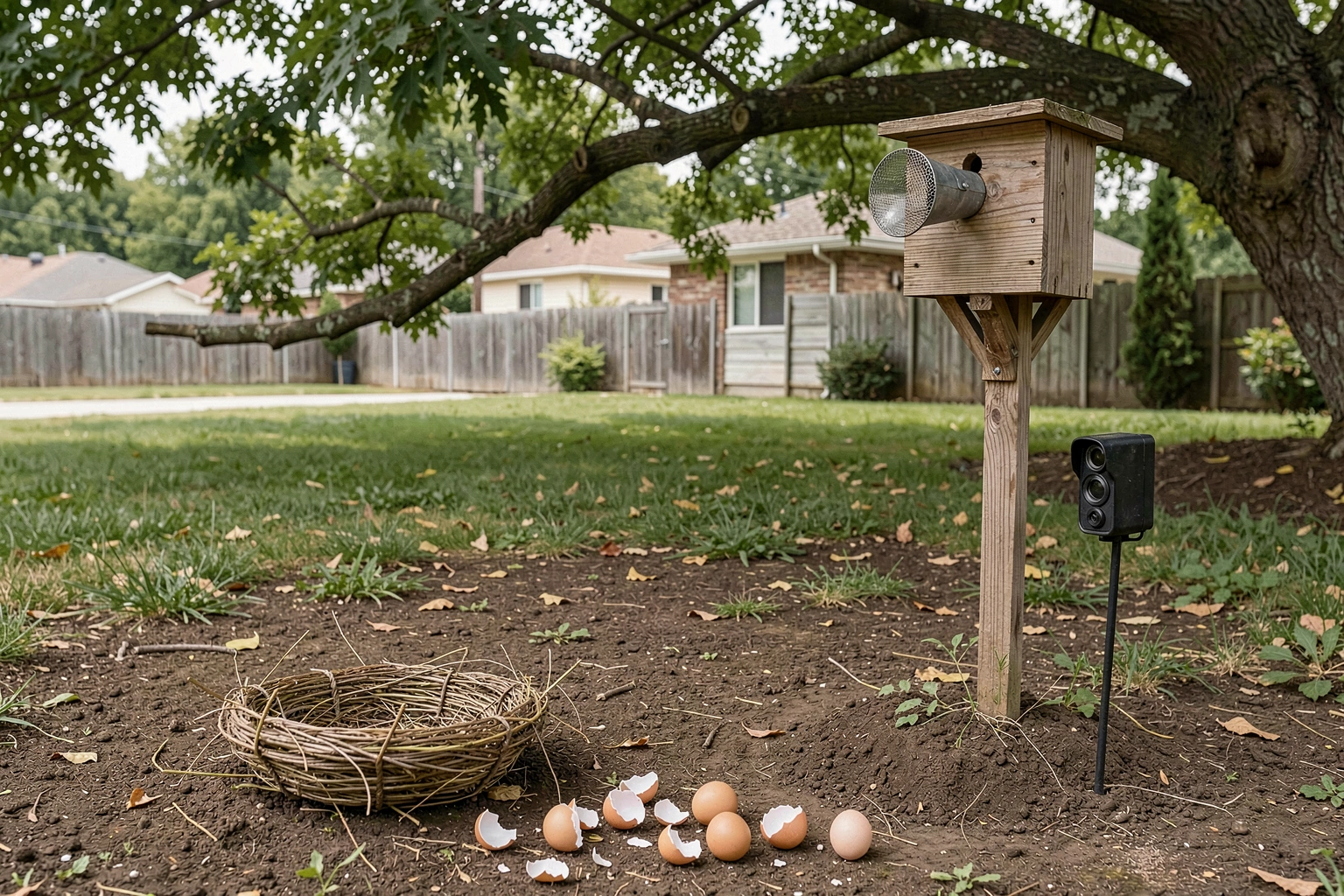
In terms of physical evidence, squirrels tend to leave cracked or broken shells near the nest or drag eggs a short distance before consuming them. You may also find a disturbed nest with displaced material. This is different from how snakes (which usually swallow eggs whole) or corvids (which leave distinctive puncture marks) operate, which matters a lot when you are trying to figure out who is responsible.
Can squirrels actually eat eggs safely?
Yes, squirrels can eat eggs without any harm to themselves. Eggs are nutritionally dense, providing fat, protein, and calories in a compact package. For a squirrel, especially early in spring when nut and seed stores are depleted, a bird egg is a high-value find. There is nothing toxic or physiologically incompatible about eggs for a squirrel's digestive system. They crack the shell, consume the contents, and move on.
This is worth understanding because it explains why deterrence has to be physical or environmental rather than relying on the squirrel eventually losing interest. The eggs are genuinely attractive and nutritious to them. A squirrel that finds eggs will come back. That is the problem you are trying to solve.
First, confirm it is actually squirrels
Before you take action, spend a few minutes confirming squirrels are really the culprit. Other animals steal eggs too, including raccoons, crows, blue jays, snakes, rats, and chipmunks. Getting this right matters because different predators require different responses.
- Broken or cracked shells near or just outside the nest: consistent with squirrels, which cannot swallow eggs whole
- Shells carried a short distance from the nest before being opened: squirrels often move eggs before consuming them
- Nest material scattered or disturbed, not cleanly removed: squirrels root through nests rather than making surgical strikes
- Daytime predation: squirrels are diurnal, so if you are losing eggs during daylight hours, that narrows the suspect list significantly
- Squirrels visibly present and active near the nest location in the days before eggs went missing
- No whole missing eggs with zero shell remnants: snakes swallow eggs whole and leave no shell; if there is literally nothing left, check for snake activity
Chipmunks can also steal eggs and leave similar evidence to squirrels, so factor in whether chipmunks eat bird eggs are present on your property as well.
What to do today to stop squirrel nest raids
Once you are reasonably sure squirrels are responsible, here is a practical plan you can start implementing right now. Not every measure applies to every situation, so pick the ones that match your specific nest type and location.
For nest boxes and birdhouses
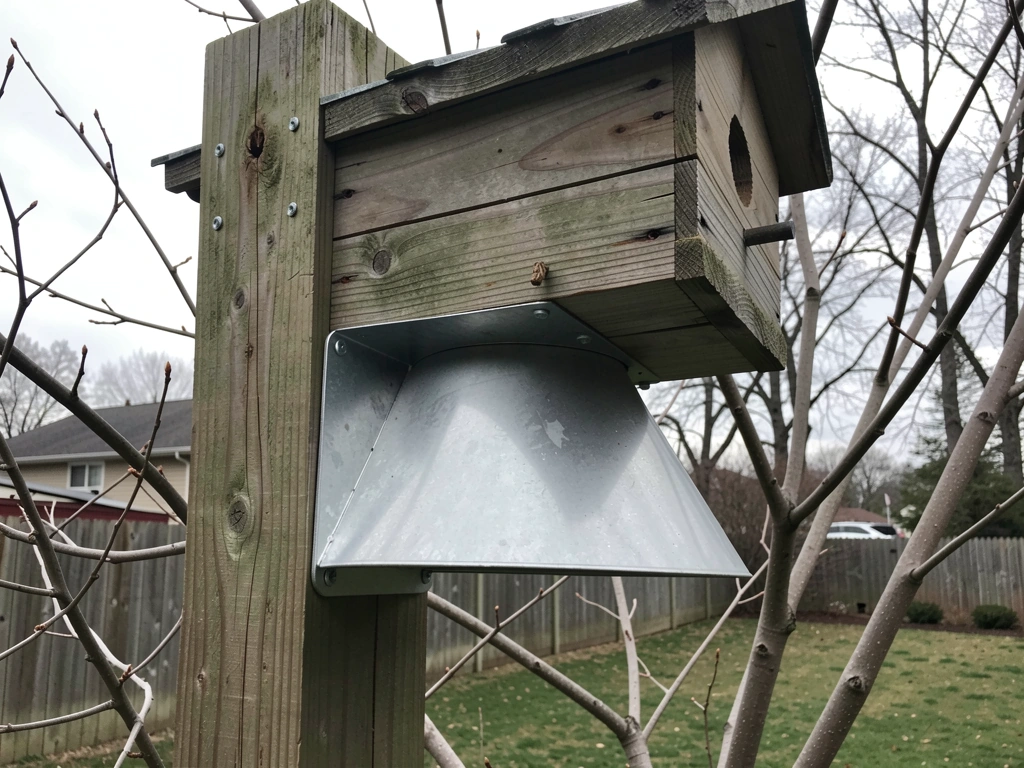
- Install a metal predator guard or baffle on the pole below the box. A cone-shaped or tube baffle at least 18 inches in diameter placed roughly 4 to 5 feet off the ground stops most climbing squirrels cold.
- Fit a metal hole restrictor plate around the entrance hole. Squirrels will gnaw through wood to enlarge an opening; a metal plate removes that option entirely.
- Move the nest box away from overhanging branches, fences, or structures. Squirrels are excellent jumpers and will leap horizontally up to 10 feet from a nearby surface. Clearance on all sides matters.
- Grease the pole with non-toxic grease or use a commercial squirrel-proof pole wrap. This is a short-term fix but can buy time while you set up a proper baffle.
For open or ground-level nests
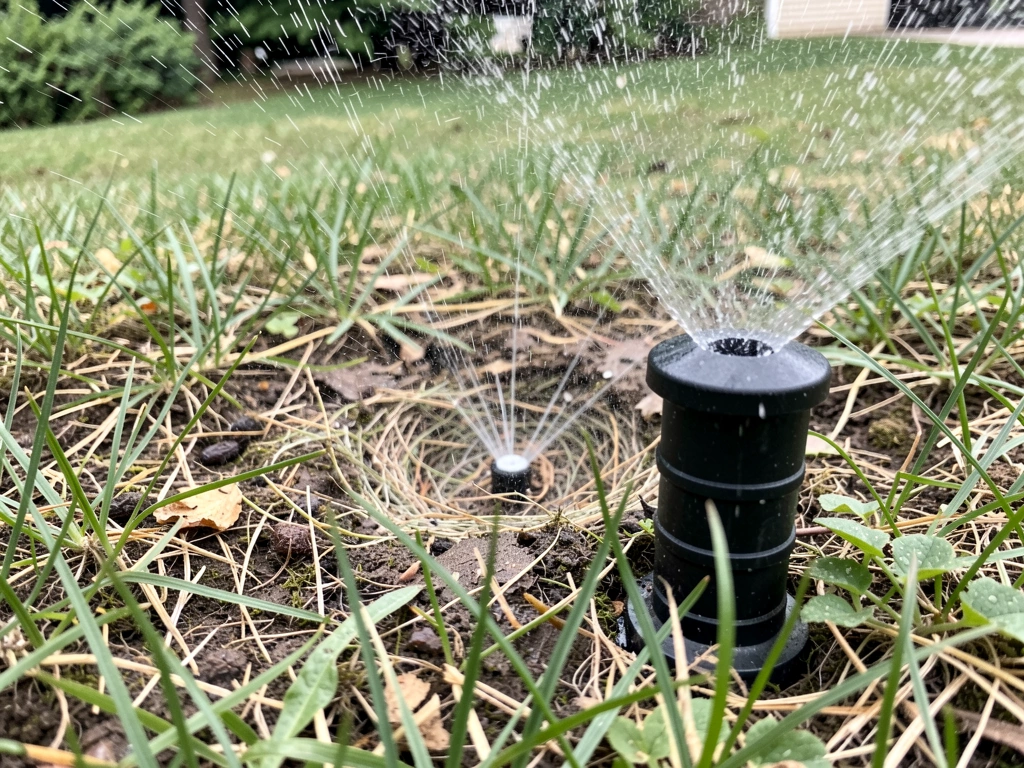
- You generally cannot and should not physically handle or move an active wild bird nest. Focus instead on discouraging squirrel access to the area.
- Set up a motion-activated sprinkler near the nest zone. These work well on ground squirrels and will startle tree squirrels that are approaching at ground level.
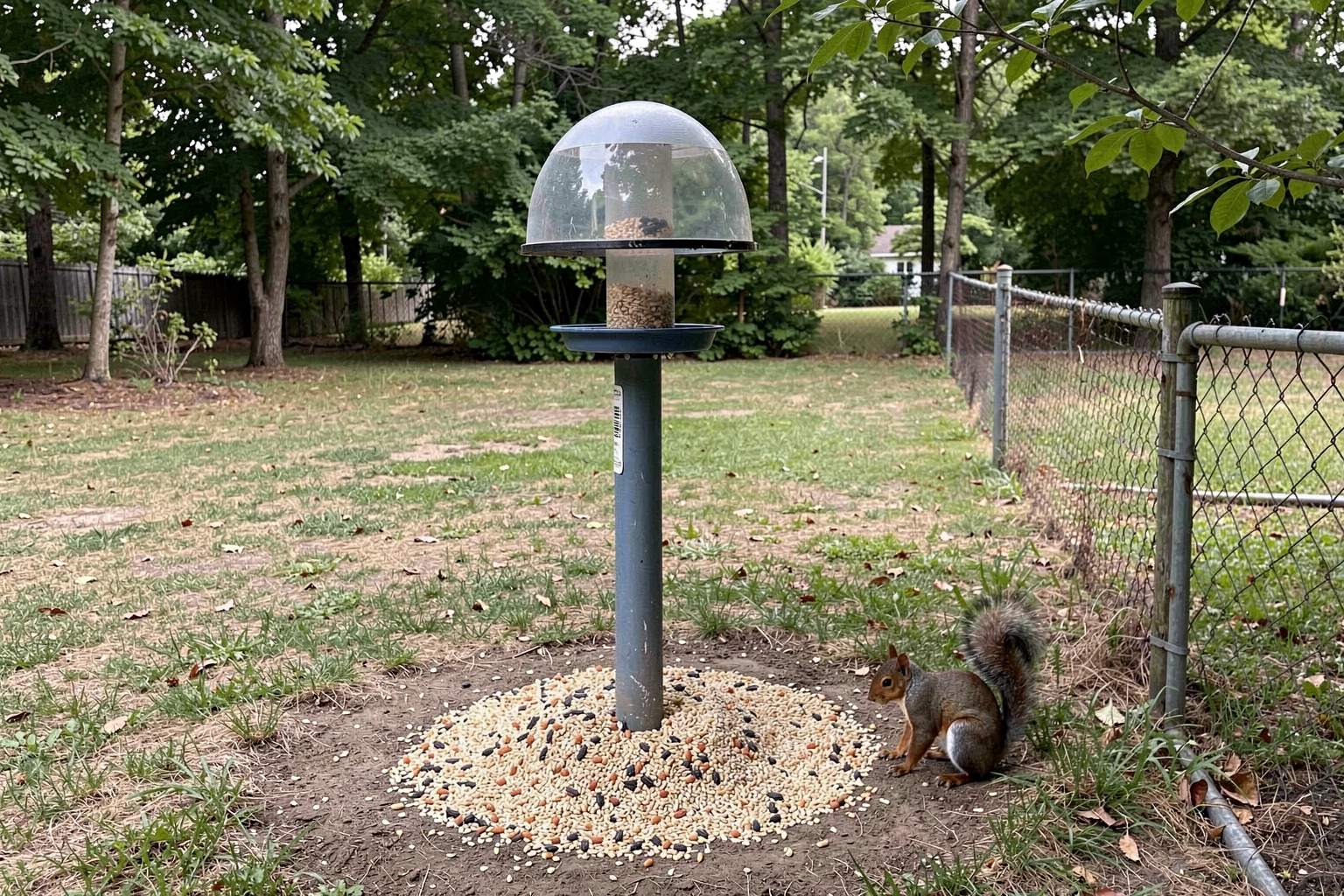
- Remove food attractants near the nest area, including bird feeders. A well-stocked feeder right next to a nesting site is essentially training squirrels to patrol that exact zone.
- Use exclusion wire or hardware cloth as a loose cage around a ground nest if you can do so without disturbing the parent bird. Use 1-inch or smaller mesh so the parent can still enter but squirrels cannot easily access the eggs.
General deterrence that works starting today
- Move bird feeders at least 10 to 12 feet away from any known or suspected nest sites to reduce squirrel traffic in that zone
- Apply hot pepper (capsaicin) products around the base of nest-supporting structures; squirrels are deterred by capsaicin while birds are not affected by it
- Set up a trail camera pointed at the nest if you can do so discreetly; this confirms the predator and lets you see when and how access is happening so you can target your response
- Trim branches that provide a squirrel highway to nest locations in shrubs or trees
- Do not use lethal traps without checking your local and state regulations; in many states, squirrel trapping requires a permit or is regulated seasonally
Quick-reference: squirrel species vs. nest type vs. best fix
| Squirrel Type | Most Common Target Nest | Best Deterrent |
|---|---|---|
| Red squirrel | Tree cavities, elevated open nests, nest boxes | Metal baffle on pole, metal hole restrictor plate, branch trimming |
| Gray squirrel | Nest boxes, shrub nests, tree nests | Cone baffle, move feeder away, clear branch access |
| Ground squirrel | Ground nests, duck nests, low vegetation nests | Motion-activated sprinkler, hardware cloth cage, capsaicin barrier |
The bottom line
Squirrels eating bird eggs is well-documented, genuinely common, and driven by real nutritional motivation. Red squirrels and gray squirrels are the main culprits at elevated nests; ground squirrels are the main issue at or near ground level. The eggs are safe for squirrels to eat, which means they are not going to stop on their own. Your job is to make access physically difficult. A metal baffle on a nest box pole, a motion-activated sprinkler near a ground nest, and clearing the branch highway to an elevated nest are the three highest-impact moves you can make starting today. Confirm it is actually squirrels first by looking for cracked shells and daytime disturbance, then go after the access point directly.
FAQ
How can I tell if the predator is a squirrel versus a raccoon or a bird (like a jay)?
Check for cracked shells and egg contents left or smeared near the nest, squirrels often disturb the nest lining and may drag eggs a short distance before eating. Raccoons more often tear apart larger sections of nest material, while many birds tend to remove individual eggs without the same shell cracking pattern. If you only find missing eggs with little shell evidence, broaden your suspect list.
Do squirrels only eat eggs in spring, or can it happen later in the year?
It can happen outside spring. Squirrels are more likely when natural food stores are scarce or when nests are accessible, including second broods and late nesting in some regions. If the activity lines up with local shortages, deterrence needs to stay in place longer than just early nesting season.
Will squirrels eat eggs if the nest box entrance is small, or do they chew their way in?
They can. If a nest box entrance opening is too small for them to enter comfortably, some squirrels will chew to enlarge it. Using a correctly sized entrance hole plus a metal guard at the entrance area helps, because baffles alone may not stop chewing once they gain a contact point.
Are squirrels more likely to eat eggs if the feeder is near the nest site?
Yes, nearby food can increase visit frequency and make raids more predictable. If you have a bird feeder and a nesting habitat close by, squirrels may spend more time in the area, which raises the odds of locating nests. Temporarily moving feeders away from known nesting spots during active nesting can reduce pressure.
Does being able to see a squirrel at my feeder mean it will definitely raid nests?
Not necessarily. A squirrel might use the feeder but still avoid a specific nest site if access is difficult. The key signal is nest-level access and repeated daytime disturbance near the nest, not just general yard presence. Use exclusion measures at the access points even if you only sometimes see squirrels.
What if I find eggs missing but no cracked shells or obvious nest disruption?
That often suggests another predator or that the remains were removed quickly. Some predators can consume eggs with minimal leftover shell, or you may not notice them if eggs are dragged away. Set up a camera or place a simple check method like monitoring immediately after the time window when you last saw the nest intact.
Do squirrels come back the next day, and how many visits should I expect?
Often, yes. Predation and cleaning can require multiple visits when more than one egg is present, especially for ground-level nests. If you re-check and find additional eggs missing or more shell fragments later that day or the next, assume the problem is active and keep deterrence focused on preventing repeat access.
Will a motion sprinkler stop squirrels from eating eggs reliably?
It can, especially for ground-level nests because it interrupts approach behavior. However, squirrels can adapt if they learn a safe route, and sprinkler coverage needs to match the travel path. Place it where they attempt to enter and ensure it reaches low vegetation and nest access points.
Do I need to remove nests and eggs after predation to prevent squirrels from returning?
Typically focus on access prevention rather than cleanup alone, because squirrels are attracted to both the food value and the site accessibility. Removing leftover remains can reduce lingering scent cues, but it usually does not substitute for baffles, guards, or blocking the branch highway leading to the nest.
Can I use poison or traps to solve this, and is it safe for birds?
Avoid poison. It can harm non-target wildlife and birds, and it is often restricted. For legal and safe control, use humane trapping or exclusion methods only where permitted, and prioritize physical barriers that stop access to nests. If you need lethal control, confirm legality and consult local wildlife guidance.
What’s the fastest way to confirm squirrels are responsible before I spend money on prevention?
Look for cracked shells, disturbed nest lining, or evidence of short-distance egg dragging near the nest. If you can, add a motion camera aimed at the nest access path, then wait through at least one nesting risk window (daytime for most squirrel activity). This avoids spending on the wrong deterrent if the culprit is a different egg thief.
Next Article
Do Squirrels Eat Bird Seed? Safety and What to Do Now
Learn if squirrels eat bird seed, if it’s safe, and what to do now to protect feeders and wildlife.